The H-IIA launch vehicle is the workhorse that has provided
Japan with reliable, independent and guaranteed access to
space since 2001.
As the first step toward the National Flagship Launch System
in the next generation, the H-IIA upgrade project aims at
improving the vehicle’s geostationary transfer orbit (GTO)
mission capabilities and payload environment conditions. This
will enable Japan to promote R&D and utilization of space, as
well as to enhance the international competitiveness of the
H-IIA launch vehicle.
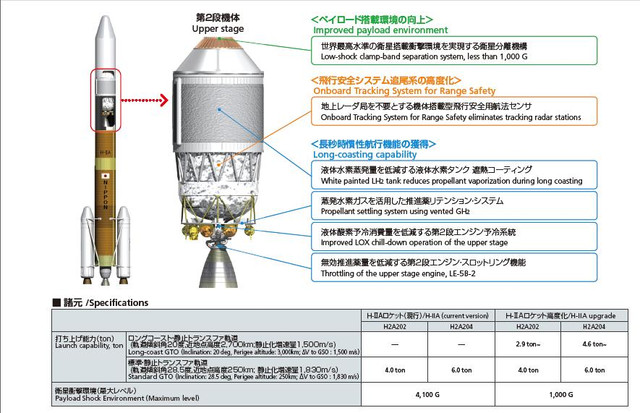
The H-IIA upgrade project focuses on upper stage modifications to
provide better services for customers. The development will be
completed by 2013 to bring the vehicle to market as quickly as
possible.
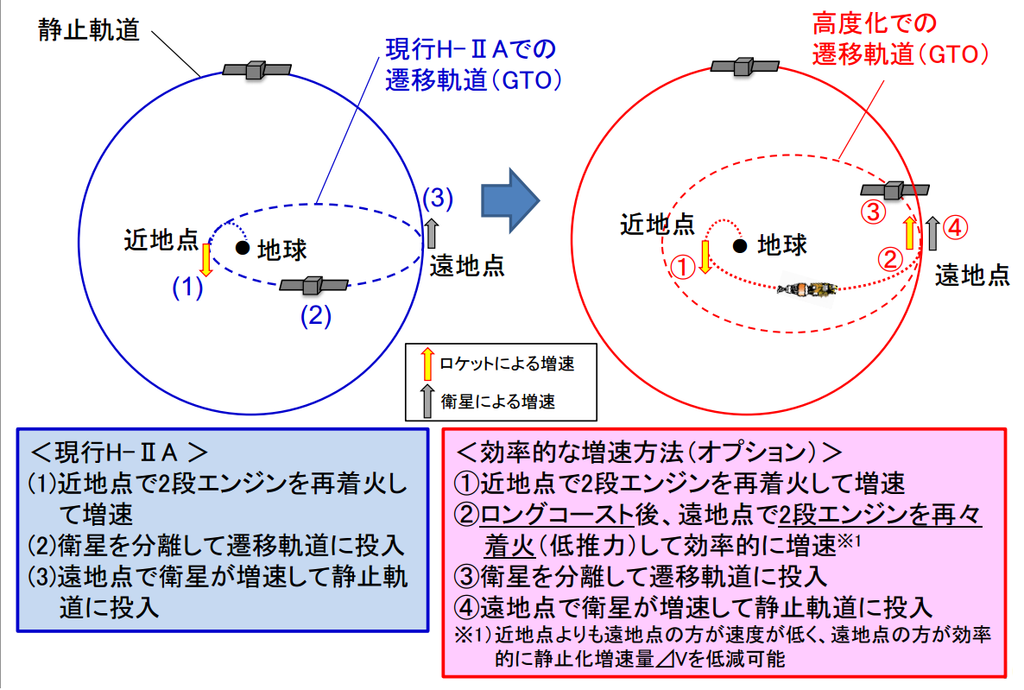
1 Long-coasting capability
The coasting duration of the H-IIA upper stage will be enhanced
from one hour to five hours by improving cross-cutting cryogenic
propulsion technologies. This will enable to inject a spacecraft closer
to geostationary orbit (GSO) than our current standard transfer orbit to
extend the fuel life of satellites, while also extending limited launch
windows for planetary exploration missions.
Japan with reliable, independent and guaranteed access to
space since 2001.
As the first step toward the National Flagship Launch System
in the next generation, the H-IIA upgrade project aims at
improving the vehicle’s geostationary transfer orbit (GTO)
mission capabilities and payload environment conditions. This
will enable Japan to promote R&D and utilization of space, as
well as to enhance the international competitiveness of the
H-IIA launch vehicle.
The H-IIA upgrade project focuses on upper stage modifications to
provide better services for customers. The development will be
completed by 2013 to bring the vehicle to market as quickly as
possible.
1 Long-coasting capability
The coasting duration of the H-IIA upper stage will be enhanced
from one hour to five hours by improving cross-cutting cryogenic
propulsion technologies. This will enable to inject a spacecraft closer
to geostationary orbit (GSO) than our current standard transfer orbit to
extend the fuel life of satellites, while also extending limited launch
windows for planetary exploration missions.
2 Improved payload environment
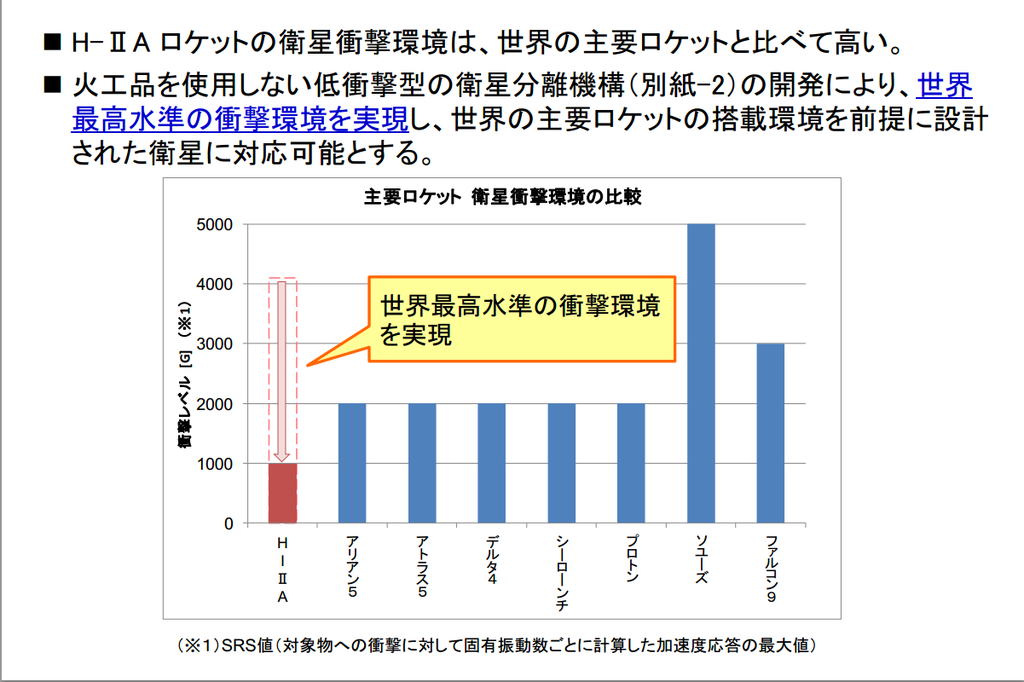
The payload shock environment will be reduced from 4,100G to
below 1,000G by a non-explosive clamp-band separation system. This
allows sensitive equipments to be located closer to separation plane
and problems with current pyrotechnic release devices will be
mitigated.
The payload shock environment will be reduced from 4,100G to
below 1,000G by a non-explosive clamp-band separation system. This
allows sensitive equipments to be located closer to separation plane
and problems with current pyrotechnic release devices will be
mitigated.
3 Onboard Tracking System for Range Safety
An onboard navigation sensor for range safety will be demonstrated
that provides navigation data for range safety without tracking
radar stations. This concept is intended to minimize the ground
infrastructure and reduce cost of operation and maintenance.
